I looked forward to reading The Signature Of All Things, I think mostly because I am a sucker for a gorgeous cover. I read it a few weeks ago and originally wasn't going to blog about it, but I changed my mind.
I don't tend to post about books unless I really liked them, and my feelings towards this book changed a number of times. I never disliked it, but it was a question of whether or not I liked it enough to blog about. In the days after having read it, I began to retrospectively enjoy it more and more. In many ways it is a quiet book, and it took a little space for me to fully appreciate that.
Elizabeth Gilbert has been branded, for better or worse, as the author of Eat, Pray Love. I am sure there are plenty of people out there who will snobbishly never read this book because of that fact. And I am almost as sure that those same people would be horrified to hear that Gilbert's writing reminded me of A. S. Byatt at times. It was a lighter read than Byatt, but the sense of the world created, the pace of that world and the people who populate it was similar to The Children's Book or Morpho Eugenia. It was really nice to sink into that world each time I opened up the book.
I thought this was a really lovely book. It said some things about women and society and ideas in a subtle way which I liked, and overall it was a nice read. It was uite well paced and skillfully written, and has a beautiful cover.
Saturday, November 23, 2013
Saturday, November 16, 2013
Shall I compare thee to a Summer's day?
The last book I posted about here was Lolita. A book all about cleverness and mental dexterity and quite proudly not about emotion, sentiment or meaning. In comparison, The Lowland made me feel so deeply that I am struggling to find the words to explain it. I can say that I am sure the power of the book lies in Lahiri's ability to manipulate a reader's feelings, just as Nabokov's genius is in his ability to manipulate language. I read a lot of it while traveling to and from work, and there were several occasions when I almost cried on the train. It was so sad but it was so beautiful that I couldn't put it out of my thoughts, I had to keep reading.
Since this is a post of comparisons I will add a final one: Edith Wharton. Lahiri's and Wharton's characters seem bound equally by fate and social conventions in the decisions they make and the paths they choose. This, in my opinion makes everything even more tragic. As a modern reader, it is possible to see another way, another choice. To see this and know the protagonist cannot adds a piquancy and a sadness to the experience. So in summing up I suppose I can only reiterate how beautiful The Lowland is, and how much it gave me to think about. It was an absolute treasure of a book.
Five melancholy teardrops out of five.
Wednesday, November 13, 2013
Not THAT Sort of Girl
When I first read Lolita, over 10 years ago, I loved it so much that I declared it to be my favourite book. I added it to my Classics Club list because I was curious to see whether or not I'd still feel the same way about it almost a decade and a half later.
The verdict is in: I don't. I had a lot of fun re-reading Lolita and I think it's fantastic. I still appreciate all the things I originally loved about it but I'm after a different reading experience these days. Lolita is a book of tricks and games. The sounds of the language and the rhythm of the words are truly brilliant. It's like every word is edible, delicious, delectable.
What Lolita lacks, however, is a sense of purpose beyond the play. As Nabokov explains in his afterword, there isn't supposed to be one, but that didn't stop me wanting it. I think the book could have been truly spectacular if Nabokov had decided to add yet another layer to it. At times I grew a little tired of the trickery and wanted something I could ponder, or something I could feel besides wry appreciation.
Tampa has been touted as the new Lolita. The only thing they have in common is that the narrator is a paedophile. Which might sound striking if you haven't read them, but in an odd way, this is almost irrelevant. I could go on a big discussion comparing them but the more I think about it, the more they are trying to do completely different things as works of literature. So I will conclude by saying that I liked them both for totally different reasons, and I'm not sure I could say which I preferred.
The verdict is in: I don't. I had a lot of fun re-reading Lolita and I think it's fantastic. I still appreciate all the things I originally loved about it but I'm after a different reading experience these days. Lolita is a book of tricks and games. The sounds of the language and the rhythm of the words are truly brilliant. It's like every word is edible, delicious, delectable.
What Lolita lacks, however, is a sense of purpose beyond the play. As Nabokov explains in his afterword, there isn't supposed to be one, but that didn't stop me wanting it. I think the book could have been truly spectacular if Nabokov had decided to add yet another layer to it. At times I grew a little tired of the trickery and wanted something I could ponder, or something I could feel besides wry appreciation.
Tampa has been touted as the new Lolita. The only thing they have in common is that the narrator is a paedophile. Which might sound striking if you haven't read them, but in an odd way, this is almost irrelevant. I could go on a big discussion comparing them but the more I think about it, the more they are trying to do completely different things as works of literature. So I will conclude by saying that I liked them both for totally different reasons, and I'm not sure I could say which I preferred.
Thursday, October 17, 2013
The Long And Short Of It
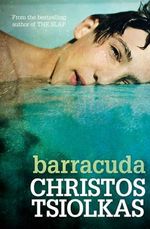
Here is my review of Barracuda by Christos Tsiolkas: Wow. Fucking wow. Fucking AMAZING.
The End.
And here is the same review again, in a few more words:
I read it a couple of weeks ago and I can't stop thinking about it. I can't stop talking about it either but I am struggling to choose my adjectives, because all the ones I want to use sound like impossibly overblown hyperbole. Also, the kinds of words I am tempted to use are "visceral", "heartbreaking", and "searing" which make it sound like a difficult and dreary read when in fact it is so vibrant and tender and beautiful that I couldn't get enough of it. Never have I been more glad that a book was over 500 pages long.
I think the way Tsiolkas uses language is fantastic but what I really love is how he manages to get right to the heart of a matter, beyond layers many of us never even notice are there. I feel he has managed to write a novel both intimate and far-reaching. I was gripped from the very start and I loved every bit of it. It made me think AND feel. Barracuda is one of the most wonderful, deeply moving books I have read in a long, long time and I cannot urge the reading of it strongly enough.
It is such a treat to read a book so utterly well crafted yet nevertheless full of energy and vim. Tsiolkas has an excellent reputation in Australian literary circles which can only increase with this novel. My only hope is that when I write my review of his next book, Google will have caught on and not put a little red line under his name when I type it.
And just one final adjective before I sign off: breathtaking.
Monday, September 9, 2013
Tampered With
Tampa. This is a word heavy with meaning in the Australian political landscape. It's an odd little aside that the recently published and hugely controversial book Tampa (Alison Nutting) must have caused a faint stirring of unease in many Australian minds at first hearing of the title. I certainly sensed dangerous territory before I actually knew what the book was about. I highly doubt Nutting is aware of the Australian context but it's rather tidy that such an unrelated incident has added to the swirl of foreboding and uncomfortableness - in my mind at the very least*.
The book itself is controversial because it is the story (in first person narrative) of a predatory, female paedophile. Lolita in reverse. I was keen to read it because I had an excellent discussion with an enthusiastic and passionate bookseller who completely sold it to me. I also thought it would be interesting to compare with Lolita, which is on my list to reread.
I found it surprisingly easy to read. Despite the very weighty issues that are associated with the book's content, Nutting has quite a breezy, light style of writing and I read the novel in a couple of days. I wonder if this style is part of the problem many readers have. What I mean is that it's flippancy and palatableness in terms of style sits uneasily with the disgustingly distasteful nature of the content. In this sense I can see similarities to Lolita although from memory (I read it in 2000) there is far more intellectual clout in terms of wordplay and literary trickery in Lolita.
I think the book is worth reading. I would even go so far as to say I enjoyed it. I think it raises interesting, uncomfortable question about power, consent and gender. Yet it also had me considering the value of fiction as a method of truth-telling. I honestly don't think I could stomach a memoir that dealt with this stuff, but knowing it is fiction made it bearable. Possibly the only way topics like this can be explored is through the veil of fiction and I really think explorations and discussions of such taboo subjects can only add to our understanding of people and the world.
*Tampa is the name of a boat carrying refugees that was turned back from Australian waters in 2001. The "Tampa affair" has turned out to be the opening chapter in a long and ongoing, highly emotional and fraught saga on refugee policies and treatment of refugees by the Australian government.
Saturday, September 7, 2013
One Schtick, Two Books
I have recently acquired two cookbooks based on TV shows. Oddly enough, I haven't really watched either of the shows in question. Normally, I wouldn't have even bothered to look at such books if I wasn't a fan of the accompanying program but I think I have been converted - just like when I discovered it's possible to love a soundtrack without ever having seen the film.
Last night I made the second recipe from The Little Paris Kitchen. I'll be honest - I had watched one episode of this and found it fairly forgettable. I would only think to watch further episodes if I were on a plane and the only other viewing options were Milo and Otis or Deal or no Deal.
But back to the book itself: It's rather nice and I am keen to try lots of the promised treats it contains. Puy Lentil Salad with Goat's Cheese, Beetroot and Dill was a big, fat-arsed winner. I was too lazy to make the dill vinaigrette so just added fresh dill and a splash of white vinegar to the bowl and it was so good; a brilliant balance of sweet, earthy, creamy and crunchy.
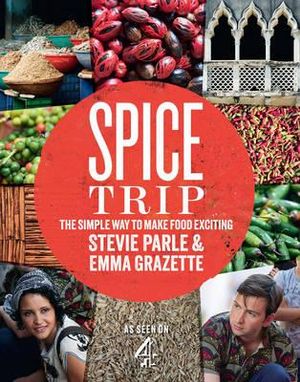
I had never even heard of Spice Trip when Tallboy brought the book home, and still haven't seen any of the program at all. By directly comparing these two books I can say that I like The Little Paris Kitchen quite a lot and that I obsessively love Spice Trip. I have only made one thing from Spice Trip (delicious, easy, exciting flavours) but I have spent a lot of time dreaming and drooling over the pages. There seem to be so many things I want to try; things I had never heard of or imagined but suddenly feel I need in my life quite badly. I made Steak with Grilled Vegetables and Cumin and Garlic Yoghurt a few weeks ago but I will not be stopping there. I have my eye on Black Cherries in Red Wine and Pepper with Sweet Yoghurt but I seem to see something else fabulous every time I open the book, so i suspect I will be raving abut it for some time to come.
Last night I made the second recipe from The Little Paris Kitchen. I'll be honest - I had watched one episode of this and found it fairly forgettable. I would only think to watch further episodes if I were on a plane and the only other viewing options were Milo and Otis or Deal or no Deal.
But back to the book itself: It's rather nice and I am keen to try lots of the promised treats it contains. Puy Lentil Salad with Goat's Cheese, Beetroot and Dill was a big, fat-arsed winner. I was too lazy to make the dill vinaigrette so just added fresh dill and a splash of white vinegar to the bowl and it was so good; a brilliant balance of sweet, earthy, creamy and crunchy.
I had never even heard of Spice Trip when Tallboy brought the book home, and still haven't seen any of the program at all. By directly comparing these two books I can say that I like The Little Paris Kitchen quite a lot and that I obsessively love Spice Trip. I have only made one thing from Spice Trip (delicious, easy, exciting flavours) but I have spent a lot of time dreaming and drooling over the pages. There seem to be so many things I want to try; things I had never heard of or imagined but suddenly feel I need in my life quite badly. I made Steak with Grilled Vegetables and Cumin and Garlic Yoghurt a few weeks ago but I will not be stopping there. I have my eye on Black Cherries in Red Wine and Pepper with Sweet Yoghurt but I seem to see something else fabulous every time I open the book, so i suspect I will be raving abut it for some time to come.
Sunday, August 25, 2013
A few thoughts.
One of the most beautiful books I can recall reading in the last four or five years has got to be Tinkers by Paul Harding, so I am very excited to be reading his second novel Enon. Like Tinkers, it's fairly short. Also like Tinkers, I will be taking my time to read it.
So far, it's been on the go for 6 days and I am only up to page 76. I just want to enjoy the process, and the best way to do that seems to be allowing time for the ideas and words to float around in my mind. There has been a lot of book-in-lap-and-gazing-out-the-window going on during my train rides to and from work this week.
What I think I like best about Harding's writing is his ability to slow down time. He makes everything feel simpler, clearer, more beautiful and less frenetic. He allows the reader to pause and muse and contemplate as though there is no timetable for which one is answerable (I haven't missed my stop on the train yet but we shall have to see what the rest of the week holds).
So far, it's been on the go for 6 days and I am only up to page 76. I just want to enjoy the process, and the best way to do that seems to be allowing time for the ideas and words to float around in my mind. There has been a lot of book-in-lap-and-gazing-out-the-window going on during my train rides to and from work this week.
What I think I like best about Harding's writing is his ability to slow down time. He makes everything feel simpler, clearer, more beautiful and less frenetic. He allows the reader to pause and muse and contemplate as though there is no timetable for which one is answerable (I haven't missed my stop on the train yet but we shall have to see what the rest of the week holds).
Subscribe to:
Posts (Atom)